Housing affordability is a diversion
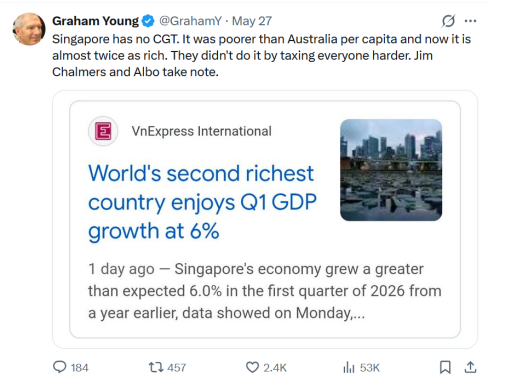
Dear , When the government says the recent changes to Capital Gains taxes and Negative Gearing are about housing affordability, don’t believe them. We’ve run the numbers, which you can read about in the media release below, and the changes will be marginal in their financial effect (the effect they have on investor confidence will be an entirely different thing). The Treasury Secretary probably called it correctly when she said they were about raising taxes, but those taxes won’t come from the real estate industry as much as they will come from investors in businesses. The changes will disadvantage investors versus owner-occupiers even more than they already are, but real estate will still be a viable investment. If it does anything at all it will push investors towards new builds, but there aren’t enough new builds for all of them, so there will be price inflation that will be pushed over onto the whole of the housing market. If they really wanted to do something about housing affordability they would follow Mark Carney, the left-wing Canadian Prime Minister, and cut net migration to zero. Canadian houses are rapidly becoming more affordable, without damage to the Canadian economy. I’m still running the figures on business investment, but the proposed CGT affects investments that can’t be geared to the hilt, and which have above average growth, the hardest. And the longer you hold the investment, the higher the CGT goes. Australia has a lot of problems, and one of the major ones is that productivity has stalled. Productivity is built by investment in business, not real estate, and business is the sector of the economy that is being hit the hardest by these changes. As my tweet at the top of this message says, Singapore grew 6% in the last quarter and has no CGT at all. Could there be a connection? Where would you prefer to site your early-stage startup? BTW, if you are on X you might like to click on the image and give the post a push. It’s already been viewed by 53,000 people, but why not twice as many? This budget is one of the most important in my lifetime. If Labor can get away with changing the tax system, breaking an election commitment, all without any consultation, then they won’t stop there. They have a spending habit, and an ideology problem. What you're seeing now is what they've always dreamed of doing since they ran a student union somewhere. Watch their lips. When they say they have “no intention” of doing something, that means “but we’ve thought about it and will likely change our minds”. After this budget you can qualify “likely change our minds” to “very likely…”. Kind regards,
GRAHAM YOUNG
EXECUTIVE DIRECTOR
AUSTRALIAN INSTITUTE FOR PROGRESS Why is Jim Chalmers bothering with CGT and negative gearing changes? When it comes to residential real estate, changes to Capital Gains Tax and Negative Gearing will make little difference to housing affordability, according to a study by the Australian Institute for Progress. Details are in a report you can download by clicking here. Executive Director Graham Young said that over the last 10 years the owner-occupier generally got more advantage out of the tax system than the investor, and that the new system would only change that marginally, making virtually no difference to housing affordability. “Over the last 10 years, using actual figures, an owner-occupier would have received a modelled return on their residence of up to 16.08% after tax (depending on their borrowings). “This compares to a return to a top marginal tax paying investor of 15.19%. Using the Chalmers’ formula this investor would receive 13.54%, which is 1.65 percentage points lower, but still better than most alternatives. “On the same 10-year comparison, the modelled returns were only 8.21% for superannuation, 5.83% for shares and 1.05%-1.30% for cash. “Would this investor have deserted the residential market for returns that are 39% lower? Obviously not. They would still have been in the market competing for existing housing as there is no better place for their money.” Mr Young said the major reason the returns were not so different is because CGT directly taxes the return on the asset, not the equity, and abolishing negative gearing defers the tax deduction for losses rather than cancelling it altogether. “Assets that can be financially engineered can still give a return that is tax-sheltered, which means this policy encourages investment in low risk assets with reliable returns more than the previous one.” Mr Young said that Dr Chalmers appears to think that preserving the existing CGT and negative gearing regime for new housing will cause stock to magically appear and free up established housing for owner-occupiers. “The problem with quarantining the existing tax regime to new housing is that in the March quarter 2026 there were somewhere around 57,000 investors financing purchases, but only around 54,000 new home starts, and increase on the previous quarters. “Owner-occupiers buy new properties too, so all the treasurer has achieved is to overwhelm new home buyers who want to live in a new property with a tsunami of investors capable of consuming more than 100% of the available stock. “This will lead to new dwellings inflating faster than established ones, forcing buyers back into the established market, pushing prices up there. “The reality is that you can’t insulate one part of the market from another – they all work in concert, which is something you should learn early-on in economics.” Mr Young said that if Jim Chalmers’ tax changes weren’t going to make houses more affordable, and housing was still significantly more attractive to investors than the alternatives, then their only effect was to raise more taxes. “I guess that’s why he bothered with this at all, but at least he could have been upfront about it. As his Treasury Secretary said ‘The money has to come from somewhere’.” For further information contact Graham Young on 0411 104 801 or graham.young@aip.asn.au.
|